.jpg)


Staff Entitlement and the Vision of the Zoo: New Challenges for Leaders

Updated: Sep 7
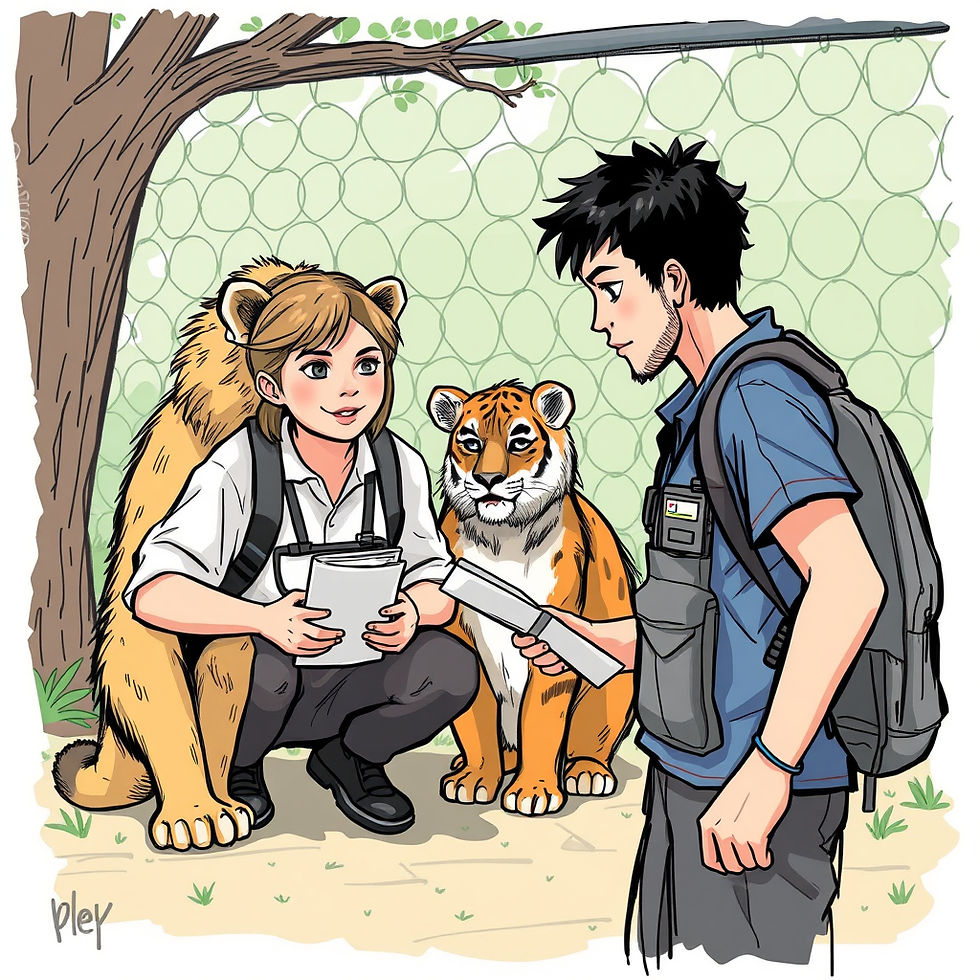
Every workplace changes over time, and zoos are no exception. The attitudes, habits and expectations that staff bring through the gates each morning look different from those of earlier generations, and that difference creates real challenges for the people who run animal collections. This is not a grump about modern workers. It is an acknowledgement that the unwritten rules of employment have shifted, and that shift has consequences for the vision of the zoo.
"Work smart, not hard" is a phrase heard in staff rooms across many establishments. Leaving at five o'clock on the dot is now seen less as a lack of commitment and more as a healthy boundary. For a sector that has always asked for heart, flexibility and the occasional unsocial hour, this creates a quiet tension between what the organisation hopes to achieve and what each member of staff is willing to give.
The Vision of the Modern Zoo Is Ambitious
Organisations that care for animals now describe their purpose in expansive terms. The Royal Zoological Society of Scotland has a vision of a world where nature is protected, valued and loved, and it describes its people as a family of dedicated teams working towards that goal. New owners at the Scottish Deer Centre share a vision for a small zoo focused on community, sustainability and conservation. Colchester Zoological Society has produced an ambitious vision for its Zoo of the Future that aims to revolutionise the zoo as we know it today and to see it become one of the leading zoos in the country.
Academic observers have noticed the same shift. By the turn of the century the older idea of the zoo as a Noah's Ark had given way to a much broader approach, with conservation and public engagement at the centre of the mission. That is a larger promise than simply displaying animals, and it places new weight on the people who deliver it daily.
Delivering on that promise is not straightforward. A zoo is a complex organisation made up of highly differentiated operational units within a hierarchical management structure. Staff are spread across animal care, education, visitor services, maintenance and administration. If the vision is to mean anything, each of those units must understand the part it plays. In practice, that understanding is rarely distributed evenly across the workforce.
How Staff Expectations Have Changed
The gap between institutional vision and daily behaviour is not caused by laziness or bad character. Most people arrive intending to do a decent job. What has changed is the frame around that job. Paid work is now one part of a full life rather than the centre of it. "Work smart, not hard" is offered as sensible advice, and the clock is respected.
That attitude is entirely workable for many roles. A duty roster is a duty roster. But animal care does not follow office hours. Births happen at night. Illness does not wait for a handover. Storms do not respect staffing rotas. When the whole team treats the shift as a strict container, the operational gaps still have to be filled by someone, and that someone is usually an experienced member of staff.
Long-serving staff carry a deeper understanding of the establishment, its history and its current direction. They know why things are done in a particular way. When others head for the car park at the stroke of five, it is often these team members who stay late, cover gaps and quietly absorb the extra work. Over time that becomes frustrating, and the frustration is entirely understandable.
The Frustration of the Committed Few
It is hard to blame a keeper who has stayed late with a sick animal for feeling irritated when a colleague leaves at the exact end of a shift. The irritation is rarely aimed at the individual. It is aimed at a system that seems to reward minimum effort while penalising the people who care. If leaders fail to acknowledge that feeling, it festers. Retention of the very staff who embody the values of the zoo becomes harder, and the vision quietly slips out of reach.

Acknowledging the Changes That Are Here to Stay
Some change deserves a welcome. The Royal Zoological Society of Scotland states a full commitment to equal opportunities and to employing a diverse workforce, publishing annual gender pay reports year after year. Fairness, transparency and inclusion are now expected parts of zoo employment. No sensible organisation would want to turn back the clock on those.
The difficulty lies in distinguishing between standards worth protecting and behaviours that place an unfair burden on other people. Leaving on time is not an offence. Refusing to adapt when an animal's welfare depends on it is another matter. The line between the two needs careful management, and in many collections it is not being managed at all.
The Scale of the Challenge
The pressure on teams is amplified by the scale of modern zoo operations. One UK research project notes that around 700 million people visit zoos around the world each year, with more than 30 million of those visits taking place in the United Kingdom. Zoos play a significant economic role as tourist attractions and aim to educate visitors about biodiversity. All of that public expectation lands on the same teams who are already managing internal tensions.
Why a Shared Vision Matters
Researchers who have looked at zoos through the eyes of zoo personnel describe the importance of vision in how animals are presented to the public. The vision is not decorative. It shapes daily choices about husbandry, enrichment, signage and the way keepers talk to visitors. When part of the team does not understand the direction of travel, the public experience becomes inconsistent.
Where teams are aligned, visitors can tell. Australia Zoo is described by visitors as one of the happiest places on earth, with staff praised as amazing and happy to share their knowledge of the animals. That atmosphere cannot be manufactured through scripts. It grows when people understand the purpose of the organisation and feel supported in delivering it.
What Leadership Can Do Now
The answer is not to demand that newer staff become copies of older ones, nor to romanticise a past where nobody left before the work was finished. It is to design work so that commitment is visible, valued and fairly shared. Practical starting points include:
building honest rotas with realistic cover for unsocial moments;
being clear about the demands of animal care from the very first interview;
pairing newer staff with experienced keepers so understanding is passed on deliberately;
noticing those who stay when it truly matters.
Above all, leaders must respond to the frustration of experienced staff. Their understanding of the establishment is usually greater because they have lived its history. When they warn that the culture is changing for the worse, they are reporting a real operational risk, not indulging in nostalgia. Dismissing that warning risks losing the very people who hold the vision of the zoo together.
Animal Insights Consultancy can help www.animalinsightscosultancy.com
How an External Consultancy Can Help
These patterns can be hard to see from the inside. Managers are busy with animal care, rotas, compliance, inspections and visitors. An external assessment can identify where pressures are building, what is driving frustration, and whether the vision of the zoo is reaching every level of the team.
Animal Insights Consultancy is a UK-based consultancy supporting zoos, wildlife parks, open farms and other animal-related enterprises with operational improvement, animal welfare and regulatory compliance. Leaders do not have to manage these cultural challenges alone. With careful assessment and practical support, the committed team at the heart of the collection can keep its enthusiasm without carrying the whole weight of the organisation by itself.
Frequently Asked Questions
Leaders often ask the same questions when workplace expectations begin to shift around them.
Is it fair to describe modern zoo staff as entitled?
Generally, no. Most staff want to do meaningful work; they simply have firmer boundaries around their time. Words like entitled create division and ignore the fact that expectations have shifted across society as a whole, not just in zoos. The real issue is usually a mismatch between fixed rotas and the unpredictable nature of animal care. That is a design problem for leadership rather than proof that individuals lack commitment.
Why is the vision of the zoo relevant to everyday staff management?
Because the vision shapes daily decisions when nobody is watching. A keeper who understands that the organisation exists to protect nature approaches cleaning, enrichment and visitor conversations differently from someone who sees the role as purely routine. The Royal Zoological Society of Scotland, for example, frames its work around a world where nature is protected, valued and loved. Turning that idea into practical tasks is the real work of leadership.
How should leaders respond to frustration among experienced staff?
Listen first. Experienced staff usually carry the deepest understanding of the zoo, including its history and practical pressures. Give them a proper channel to raise concerns, involve them in designing fair rotas, and recognise the extra duties they absorb. Where internal habits are too fixed, an external consultant can assess the operation and support leadership. Acting early prevents frustration from turning into resignation and protects the knowledge base of the collection.
Can good work-life balance and strong animal welfare coexist in a zoo?
Yes, but only with honest planning. Animal needs do not follow office hours, so proper cover must be built into rotas rather than left to goodwill. When that happens, staff can leave on time knowing the animals are safe and colleagues are not being burdened. The expectation to be always available disappears, and commitment becomes a shared responsibility rather than a quiet competition.
*Also Avaliable in Greek




Comments