


Safety in the Modern Animal Establishment: Why Staff Training Has to Change

A phone in every pocket has changed what it means to run a public animal collection — and it has changed what animal industry staff training must cover. Twenty years ago, an encounter between a visitor and an animal happened once, in a single place, and was witnessed by whoever stood nearby. Today, that same encounter is filmed in seconds, shared within minutes, and watched by thousands of people who were never there. Many of them will form an opinion about your establishment, and some will try to recreate what they saw.

The industry has always talked about flexibility and commitment as the marks of a good animal team. Those qualities still matter. But the modern collection asks something more of its people: the discipline to manage risk in a world where nothing is private anymore.
Why Category 1 is only part of the picture
Public attention fixes on the species on the dangerous-animal list — the big cats, the bears, the venomous reptiles. That is where legislation concentrates, and where a collection is most likely to receive scrutiny after an incident. But it is not where all the risk lives.
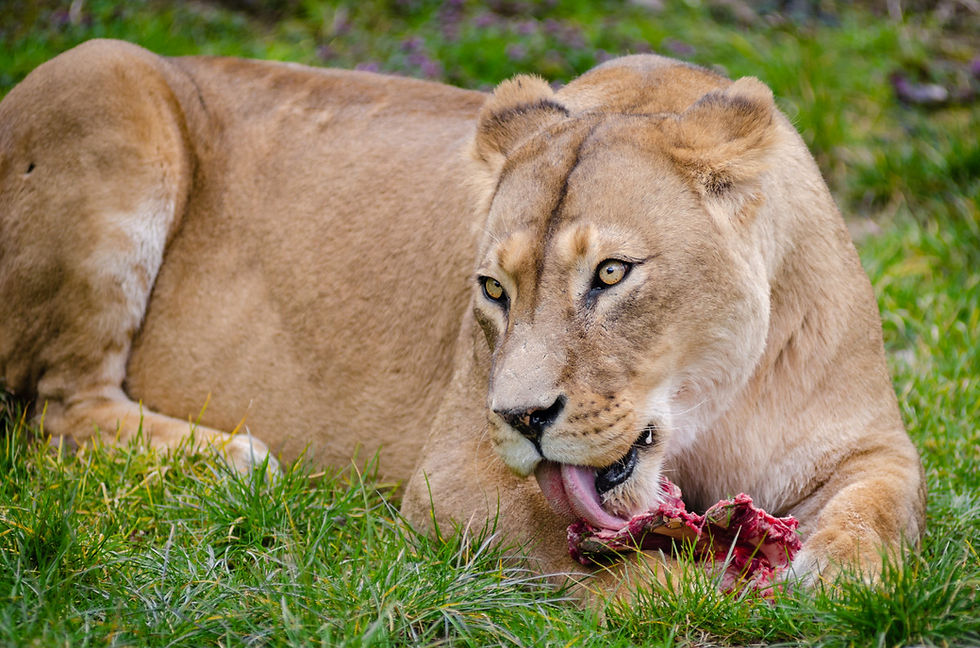
Any species can present a challenge. A horse, a domestic dog handled carelessly, or a goat that a visitor assumes is harmless can cause serious, even lethal harm. The difference is that nobody treats those animals with the same caution, because they do not carry the label. A member of the public will approach a goat where they would never approach a tiger — and that overconfidence is itself the risk.
This is the point worth stating clearly, because it is rarely stated: the danger in an animal establishment is not defined by licence category alone. It is defined by the gap between what the visitor believes and what the animal actually needs from a human who knows better.
The phone has made imitation a safety issue
Before social media, a visitor's behaviour was shaped mainly by the signage in front of them and the staff they could see. Now it is shaped by everything they have ever watched. A person who has seen edited footage of people getting close to large or dangerous animals may arrive at a real collection with a different sense of what is acceptable.
That creates a new kind of visitor — not malicious, usually, but misinformed. They are not trying to cause harm. They are trying to get the photograph, recreate the clip, or prove a point they half-remember from a video. The risk is real even when the intent is not.
Nothing is private anymore. Every enclosure, every interaction, every moment is potentially public. That is not a reason to resent the visitor. It is a reason to design for reality rather than for the ideal, well-behaved guest who follows every sign.

Why animal industry staff training has to be refreshed
Most collections train their people well for animal care and basic safety. What has changed is the surrounding reality, and training has not always kept pace. A modern animal team needs more than husbandry knowledge. It needs to be briefed, rehearsed and confident in a set of skills that simply did not exist a generation ago.
Recognition, not just reaction. Staff should be taught to spot the visitor who is mentally preparing to do something unwise — lingering too long, filming from the wrong place, holding a door slightly open, testing a barrier. Noticing the moment before it happens is worth more than responding after it has.
Unwelcome approach, handled early. The goal is to prevent the situation where a member of the public attempts to enter a habitat or reach an animal. That means calm, confident, early intervention — a word, a gesture, a quiet repositioning — before the situation escalates into something that gets filmed and shared.
Process for the unfortunate event. Every collection hopes never to need it, but every collection must have it: a clear, practised protocol for when a person enters the wrong place, when an animal reacts, or when an incident is being filmed. Who speaks first, who secures the area, what is said and not said, and how staff are supported afterwards.
The honesty to accept difficult people. There will always be visitors who disregard instruction, and pretending otherwise does not help. The professional response is not resentment but preparation — accepting that a small number of people will not cooperate, and having the team, the design and the policy in place so that their behaviour does not become a crisis.
The same skills protect a different kind of exposure
Here is the part that connects training to the wider life of the collection. A well-trained, calm, rehearsed team is also exactly the team that handles a critical news story well. The person who can de-escalate a visitor at the barrier is the same person who can answer a journalist's question without making a bad situation worse. Incident response and press response are not separate skills. They draw on the same discipline: knowing what is happening, staying calm, and controlling what can be controlled.
What flexibility and commitment really mean
Flexibility in an animal team does not mean willingness to work any hour. It means being able to move from husbandry to visitor safety to a difficult conversation without losing composure. Commitment does not mean simply staying late. It means caring enough about the animals and the people who come to see them to keep learning, to attend CPD, to update knowledge of legislation and species behaviour, and to accept that yesterday's answers may not fit today's environment.
Flair still has its place. A lively, modern animal establishment is not a sterile one. The best collections have a spark — they are warm, engaging, full of the enthusiasm that makes people care about animals in the first place. That atmosphere is not in conflict with discipline. It depends on it. Visitors relax and enjoy themselves precisely because they can sense that the people in charge are quietly, confidently in control.
The continuous responsibility
Knowledge in this industry does not stand still. Species understanding deepens. Legislation changes. Technology and visitor behaviour change faster than either. Upskilling is not an occasional event. It is the ongoing condition of running a responsible collection, and it links directly to the development of the team as a whole — the experienced keeper and the new starter learning together, and the entire establishment growing in confidence and competence at the same pace.
Where this leaves a collection
The modern animal establishment needs people who are flexible, committed and skilled — and it needs those people to be ready for a visitor who has a camera, a preconception, and no fear of the animal in front of them. The answer is not to close the doors or to resent the public. It is to train, to design, to educate, and to prepare, so that the collection stays safe, welcoming and alive.
The incident you hope never happens is the one you train for before it does. That is the difference between a collection that copes with pressure and one that is genuinely ready for it.
References and further reading
Health and Safety at Work etc. Act 1974 — legislation.gov.uk
Preventing or controlling ill health from animal contact at visitor attractions or open farms — Health and Safety Executive
Managing risks and risk assessment at work — Health and Safety Executive
Zoonoses — Health and Safety Executive


Comments