


Is the Portrayal of Animal Collections Fair Natural History Education in a Misled World

Updated: Oct 6
Below is a structured text that includes references from universities and colleges, as well as quotes from Gerald Durrell and David Attenborough.
Importance of Conservation in Education
Many universities and colleges emphasise the significance of wildlife conservation and biodiversity in their curricula. Institutions such as:
University of Oxford: Offers programmes in Environmental Science and Biodiversity, highlighting the urgency of conservation efforts.
Stanford University: Features the Stanford Woods Institute for the Environment, focusing on sustainable solutions to ecological challenges.
University of California, Berkeley: Provides courses in Conservation Biology, stressing the need for protecting endangered species and habitats.
Yale University: Home to the Yale School of the Environment, which promotes research and education in environmental stewardship.
Insights from Conservationists
Renowned conservationists have shared their perspectives on the importance of wildlife preservation. Gerald Durrell, a passionate advocate for animal conservation, once stated:
"We cannot close our eyes to the fact that the world is becoming a more dangerous place for wildlife. It is our responsibility to ensure that future generations inherit a rich and diverse natural world."
Similarly, David Attenborough, a celebrated broadcaster and natural historian, has famously remarked:
"The truth is: the natural world is changing and we are totally dependent on that world. It provides our food, water, and air. It is the most precious thing we have and we need to work together to protect it."
Conclusion
The integration of conservation education in universities and colleges, along with the wisdom of figures like Gerald Durrell and David Attenborough, underscores the critical need for collective action in preserving our planet's biodiversity.
The public debate about animal collections is badly out of balance. Too often, a zoo, wildlife park, aquarium, sanctuary, or reptile house is judged by a single photograph, a loaded caption, or a viral clip stripped of context. That does not mean every animal collection deserves applause. Some deserve hard criticism. Some should improve. A few should not exist at all.
That said, the broad portrayal is not fair when it turns a complex question into a simple villain story.
Good natural history education matters because people cannot protect what they do not understand. In a world full of noise, outrage, and half-truths, direct contact with living animals can still teach patience, respect, and ecological literacy. The fair position is not blind defence. It is honest balance: welfare first, evidence over slogans, and education that connects animals to the wider living world.
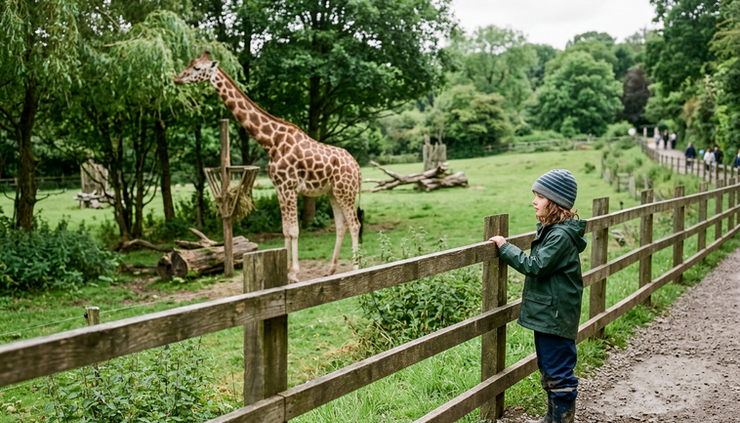
Animal collections are not all the same
One of the biggest failures in the debate is the habit of treating every animal collection as identical.
A roadside menagerie with poor housing is not the same as a well-run conservation zoo. A serious aquarium involved in breeding threatened freshwater fish is not the same as a tank kept for spectacle alone. A rescue centre caring for animals that cannot return to the wild is not the same as a show built purely around human entertainment.
The phrase “animal collections” covers a wide range of places, including:
Public zoos
Aquariums
Wildlife parks
Falconry centres
Reptile collections
Rescue centres
Sanctuaries
Breeding centres
Educational collections
Some do excellent work. Some do acceptable work but could do more. Some use education as a thin label for display. Serious criticism should recognise those differences.
When people fail to separate good practice from bad practice, two things happen. Poor operators hide inside the reputation of better ones. Better operators lose public trust even when they are doing meaningful work.
That is the opposite of progress.
The fake news problem distorts animal stories
“Fake news syndrome” is not only about politics. It affects wildlife and animal welfare too. A short video of a pacing animal can provoke justified concern, but it may not tell the full story. Is the animal stressed? Is it waiting near a gate at feeding time? Is there a medical issue? Is the clip old? Was it filmed at a facility that has since changed? Has anyone asked the keepers, vets, or inspectors?
The answer may still be uncomfortable. The animal may be suffering. The enclosure may be poor. The management may be weak. But a conclusion reached before the evidence is not justice. It is reaction.
Animal stories are especially vulnerable because people care deeply. That care is a strength, but it can also be used. A sad image travels quickly. A careful welfare report does not. A dramatic claim gets attention. A measured explanation sounds less exciting.
That creates a public conversation where emotion often arrives before knowledge.
Compassion without accuracy can miss the animal it is trying to defend.
This matters because bad information leads to bad choices. A decent collection may lose support for conservation work because of a misleading post. A poor collection may keep operating because it has good public relations. A campaign may focus on the most visible issue while ignoring habitat loss, illegal trade, pollution, or climate pressure, which often harm far more animals in the long term.
The public deserves better than a fight between denial and outrage.
Education is not a weak excuse when it is done properly
Critics often ask whether education is just a convenient defence. Sometimes it is. A sign with three facts beside a cage does not make a place educational. A keeper talk that turns an animal into a trick performer is not natural history learning. A school visit should offer more than a memorable day out.
Real education has depth. It helps people understand:
Where an animal lives in the wild
What it eats and what eats it
How it behaves when given choice
Why its habitat is under pressure
How human choices affect its future
What good welfare looks like in captivity
Natural history education should build humility. It should move people away from seeing animals as props and towards seeing them as living beings with their own needs, senses, and place in an ecosystem.
A well-run animal collection can do this in a powerful way. It can show the difference between a predator and a villain. It can explain why amphibians matter, why insects are not disposable, why wetlands protect life, and why a snake is not a monster. These lessons are not small. They shape how people vote, buy, garden, travel, donate, and speak about nature.
Books, films, and online resources also matter. So do nature reserves and wild places. But not everyone has access to rich wildlife experiences. In much of modern Britain, children may grow up seeing more wildlife on screens than in fields. For many people, a zoo or aquarium may be the first place they look into the eye of an animal and realise that nature is not abstract.
That moment can matter.

Welfare must lead the conversation
Defending animal collections without talking about welfare is a mistake. Welfare is the foundation. Without it, conservation claims and education programmes lose moral weight.
Good welfare is not only about food, water, and veterinary care. It includes choice, space, social needs, mental stimulation, privacy, and the chance to express natural behaviour. Animals should not exist as living exhibits alone. Their daily lives matter when no visitor is watching.
A fair view of animal collections should ask plain questions.
Does the animal have room to move in meaningful ways?
Can it hide from people?
Can it make choices?
Is the enclosure designed around the animal’s needs rather than visitor convenience?
Are social animals kept with suitable companions?
Are solitary animals protected from forced contact?
Is there enrichment that changes and challenges them?
Are staff trained, observant, and willing to adapt?
These questions cut through both propaganda and panic. They also place responsibility where it belongs: on the people who keep animals.
If a collection cannot meet the needs of a species, it should not keep that species. If a display exists mainly because an animal is impressive to look at, that is not enough. Public affection for big cats, apes, elephants, sharks, or polar bears must never become an excuse for unsuitable conditions.
The best collections understand this. They reduce or end the keeping of species they cannot house well. They redesign enclosures. They invest in staff. They work with inspectors, vets, researchers, and other institutions. They explain difficult decisions rather than hiding them.
A fair portrayal should encourage that direction, not flatten everything into “all zoos are cruel” or “all criticism is extreme”.
Conservation is real, but it should not be used as a shield
Conservation is one of the strongest arguments for some animal collections. Captive breeding has helped species such as the Arabian oryx, Przewalski’s horse, the California condor, and certain island snails. Many collections also support field projects, research, veterinary work, habitat protection, and public fundraising.
That work matters. It proves that carefully managed animal populations can play a role in repairing damage caused by human activity.
Yet conservation must be specific. A collection should be able to explain what it does, which species benefit, and how its work connects to wild populations or habitat protection. Vague statements about “raising awareness” are not enough on their own.
There is a risk when conservation becomes a moral blanket thrown over every exhibit. Keeping a common species in a poor enclosure does not become noble because the entrance sign mentions biodiversity. A strong education programme does not cancel out weak welfare. A breeding programme with no clear purpose should be questioned.
The honest defence is narrower but stronger: some animal collections make a genuine conservation contribution, and those that do should be recognised, supported, and held to high standards.
This is where balance becomes useful. It does not excuse failure. It identifies value.


The anti-zoo argument deserves a serious answer
The strongest counterargument is simple: wild animals should live in the wild, not in human-made enclosures.
That concern cannot be brushed aside. Captivity limits freedom. Even the best enclosure is not a forest, ocean, desert, or mountain range. Some species range over vast distances, form complex societies, or respond badly to confinement. The moral burden sits with the people who choose to keep them.
This is why the question should never be, “Do visitors enjoy seeing this animal?” The better question is, “Can this animal have a good life here, and does its presence serve a serious purpose?”
For some species and settings, the answer may be no. For others, it may be yes, if the welfare standards are high and the educational or conservation purpose is real.
There is also a painful truth behind the “wild belongs in the wild” argument. Much of the wild is no longer safe. Habitats shrink. Rivers are polluted. Forests are fragmented. Species are trapped between farming, development, illegal trade, invasive species, and a changing climate. Saying animals belong in the wild is morally right, but it does not solve what happens when the wild has been broken.
Animal collections are not a replacement for habitat protection. They must never be treated as one. But in some cases, they form part of a wider safety net.
That is not a perfect answer. It is a practical one.
The public needs better natural history literacy
The deeper issue is not only how animal collections are portrayed. It is how poorly many people understand nature itself.
A society can love wildlife and still misunderstand it. People may adore dolphins while ignoring overfishing. They may campaign for large mammals while caring little about beetles, fungi, worms, or freshwater invertebrates. They may fear snakes, dislike bats, or see predators as cruel because they judge nature by human manners.
Good natural history education corrects that. It teaches that ecosystems are connected. It shows that death, predation, breeding, migration, decay, and competition are part of life. It helps people see animals as animals, not cartoon heroes or villains.
This matters for wellbeing too. Human wellbeing is linked to the health of the living world. Clean water, fertile soil, pollination, climate stability, and disease balance all depend on functioning ecosystems. Time with nature can also support mental health for many people, though it is not a cure-all and should not be oversold.
When education is honest, it gives people a steadier relationship with the natural world. Less fear. Less fantasy. More responsibility.
Animal collections can help with that, but only if they resist cheap spectacle. They should show animals with dignity. They should explain difficult subjects, including extinction, animal welfare, habitat loss, and the limits of captivity. They should invite questions, not just admiration.
Fairness means pressure and praise
A fair portrayal of animal collections must hold two truths at once.
Some criticism is deserved. Some enclosures are not good enough. Some messages are shallow. Some animals should not be kept in some places. Public pressure has helped improve standards, and it should continue.
At the same time, blanket condemnation is unfair and often lazy. It ignores skilled keepers, veterinary teams, educators, researchers, and conservation workers who dedicate their lives to animal care. It dismisses the child who learns to love amphibians after seeing one up close. It overlooks the threatened species kept alive through careful breeding. It weakens trust in serious education at the very moment society needs more of it.
The better approach is not sentimental defence. It is informed judgement.
Ask for transparency. Ask for welfare evidence. Ask what education achieves. Ask whether conservation claims are clear. Ask whether the animals have lives worth living. Then judge from there.
That kind of scrutiny is fair. It is also far more useful than viral certainty.

A misled world needs careful truth
The world is unbalanced, and nature is paying the price. That is exactly why the conversation about animal collections should become more careful, not more extreme.
A society that cannot tell the difference between a poor animal display and a serious conservation collection will struggle to make wise choices. A public trained by outrage will miss nuance. A media culture built on quick judgement will fail animals as surely as neglect does.
Animal collections should earn trust, not demand it. They should welcome fair questions and prove their value through welfare, education, and conservation. Critics should keep pushing for better standards, but they should also be accurate. Truth matters, especially when animals cannot speak for themselves.
The portrayal of animal collections is not fair when it is driven by fake news, selective images, or simple moral theatre. It is justified when it exposes real suffering and demands change.
The balance we need is clear: defend good natural history education, challenge poor animal welfare, and refuse to let misinformation speak for nature. That is how we serve animals best, not with noise, but with care, knowledge, and honesty.


Comments